Digital Inkjet Printing vs. Traditional Glazing: The Technology Behind Modern GVT Surfaces
- Home
- Utility
- News & Blogs
- Digital Inkjet Printing vs. Traditional Glazing: The Technology Behind Modern GVT Surfaces
Digital Inkjet Printing vs. Traditional Glazing: The Technology Behind Modern GVT Surfaces
Ask most people what makes a GVT tile look the way it does, and they'll point to the glaze. But the real transformation in tile design over the last two decades hasn't been the glaze itself — it's been in how that surface gets printed. The shift from traditional printing methods to digital inkjet technology is arguably the biggest technical leap the tile industry has made.
How Traditional Glazing Worked
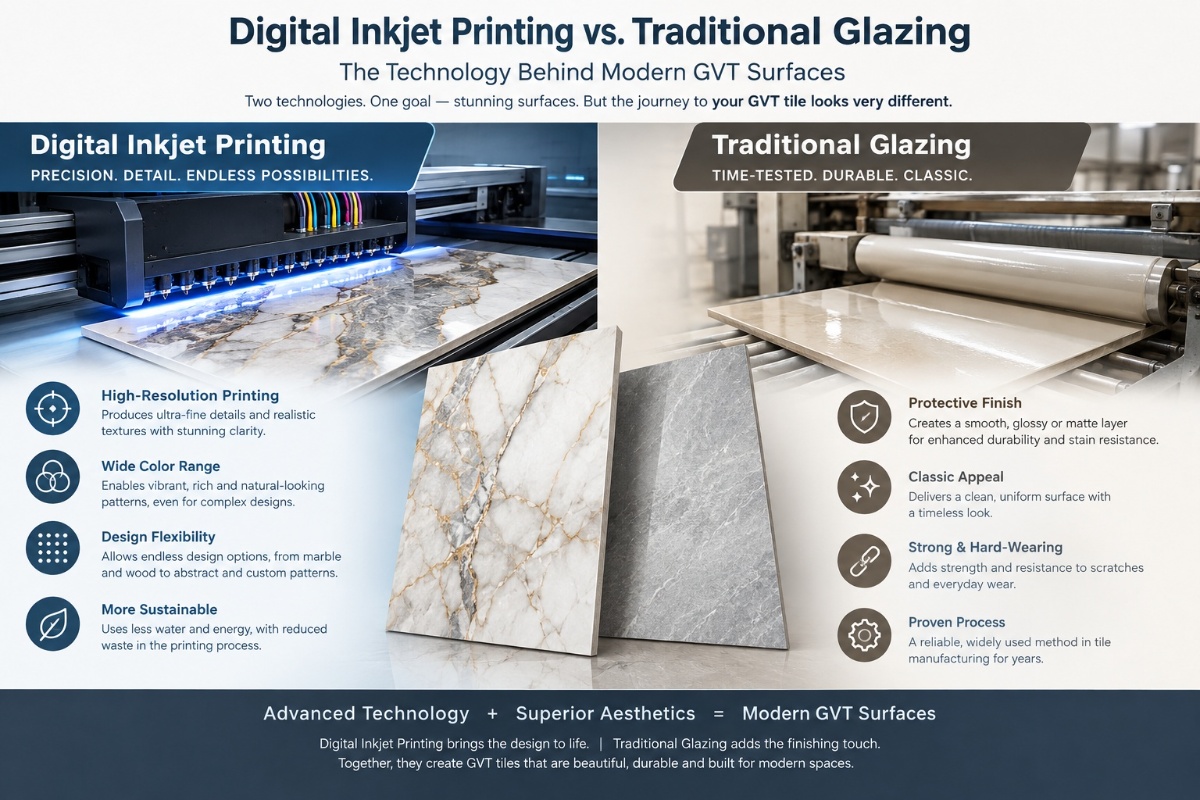
Before digital printing became standard, tile decoration relied on methods like rotocolour and screen printing — physical rollers or screens pressed a fixed pattern onto the tile surface, layer by layer. Each color needed its own screen or cylinder, and the design was locked in once the tooling was made. A new pattern meant retooling the entire line, making design changes slow and expensive. This also created a visible repeat every few tiles — something sharp eyes could easily spot, especially in wood-look or stone-look designs.
What Changed With Digital Inkjet Printing
Digital inkjet printing replaced the physical stamp with a printhead — the same basic idea as an office printer, engineered for ceramic surfaces. Ink is applied directly onto the pressed tile body or a wet base glaze, then a transparent top glaze locks in wear resistance. With no physical die involved, several advantages follow naturally: modern machines run continuously at 30-50 meters per minute, using up to 1,000 nozzles across six ink channels for far greater color depth than screen printing allowed.
Because the process is non-contact, tiles no longer risk breakage from a pressing surface — opening the door to thinner tile bodies. It also enables randomized, no-repeat patterns and the ability to print on textured surfaces and beveled edges, something screen printing simply couldn't do.
Why This Matters for Design
The result shows up on showroom floors daily. Wood-look and marble-look GVT tiles that once had an obvious repeat now display genuine randomization, closely mimicking real material variation. Setup times between design changes have also dropped dramatically, since there's no physical tooling to swap out — and because patterns are stored digitally rather than on physical screens, batch-to-batch consistency improves too.
That said, digital printing doesn't fully replace traditional techniques everywhere — for very high paste thicknesses or strongly saturated, solid-color surfaces, conventional application can still be more efficient.
The Bigger Picture
Digital inkjet technology didn't just make tiles prettier — it changed the economics of manufacturing. Lower tooling costs, faster design turnaround, and the ability to run short batches of niche designs without major retooling have helped manufacturers keep pace with fast-moving trends. For buyers and specifiers, the takeaway is simple: when a GVT tile convincingly mimics stone or wood grain without an obvious repeat, digital inkjet printing is almost certainly why.