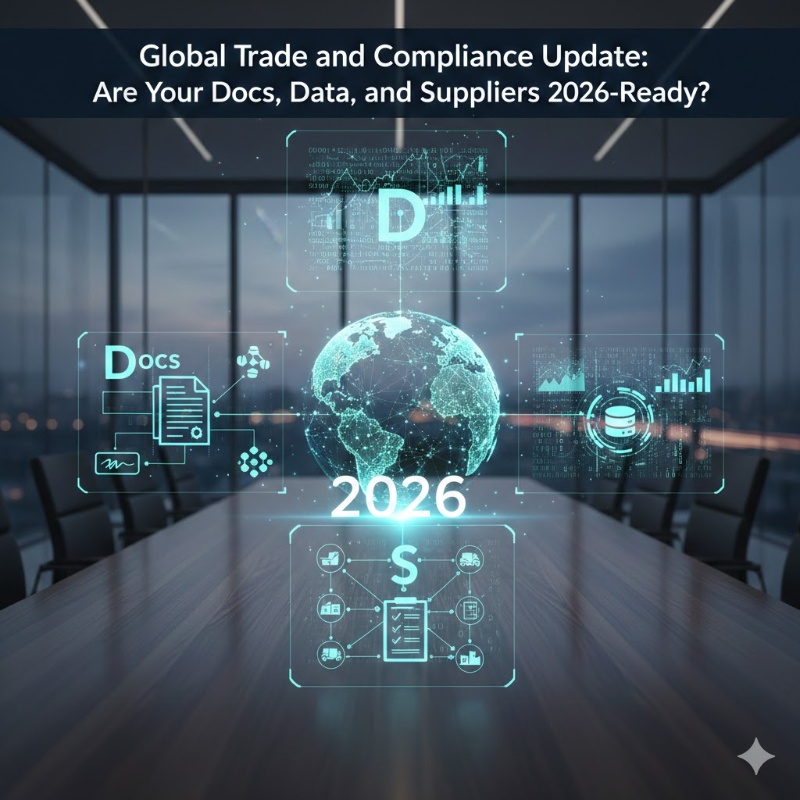
Global Trade and Compliance Update: Are Your Docs, Data, and Suppliers 2026-Ready?
- Home
- Utility
- News & Blogs
- Global Trade and Compliance Update: Are Your Docs, Data, and Suppliers 2026-Ready?
Global Trade and Compliance Update: Are Your Docs, Data, and Suppliers 2026-Ready?
The world of global trade is in constant flux, a dynamic landscape shaped by geopolitical shifts, technological advancements, and an ever-evolving regulatory environment. For businesses operating internationally, staying ahead of these changes isn't just good practice—it's essential for survival and growth. As we move closer to 2026, a critical question looms: Are your documentation, data, and supplier networks truly ready for the challenges and opportunities ahead?
The next few years are set to bring significant transformations, demanding greater transparency, more robust data management, and an even deeper understanding of your supply chain. Let's delve into what your business needs to consider to be truly 2026-ready.
The Documentation Revolution: Beyond Paper Trails
Remember the days of endless paper trails and physical archives? While some documents will always require a tangible form, the future of trade documentation is undeniably digital. 2026 will see an acceleration in the adoption of electronic trade documents, digital customs declarations, and blockchain-verified certificates.
What you need to do:
-
Digitize and Automate: If you haven't already, invest in robust document management systems. Look for solutions that integrate with your ERP and CRM, automating the creation, submission, and archiving of critical trade documents.
-
Embrace e-Signatures and Digital Identity: Ensure your processes and systems are compliant with international standards for electronic signatures and digital identity verification. This will be crucial for seamless cross-border transactions.
-
Standardization: Work towards standardizing your document formats and data fields to align with international norms, reducing errors and speeding up processing times.
The goal is a seamless, secure, and largely paperless flow of information that reduces delays and minimizes the risk of non-compliance.