Testing Standards for Tiles: EN, ANSI, ISO — What Do They Mean?
- Home
- Utility
- News & Blogs
- Testing Standards for Tiles: EN, ANSI, ISO — What Do They Mean?
Testing Standards for Tiles: EN, ANSI, ISO — What Do They Mean?
At Worldwave International, we believe that quality begins with standards. When choosing porcelain or ceramic tiles for your project, you’ll often see certifications like EN, ANSI, or ISO. But what do these standards mean — and why are they important?
These are internationally recognized testing benchmarks that ensure tiles meet strict criteria for strength, safety, and durability before they reach you.
🔷 EN (European Norms)
EN standards are used in Europe to test:
-
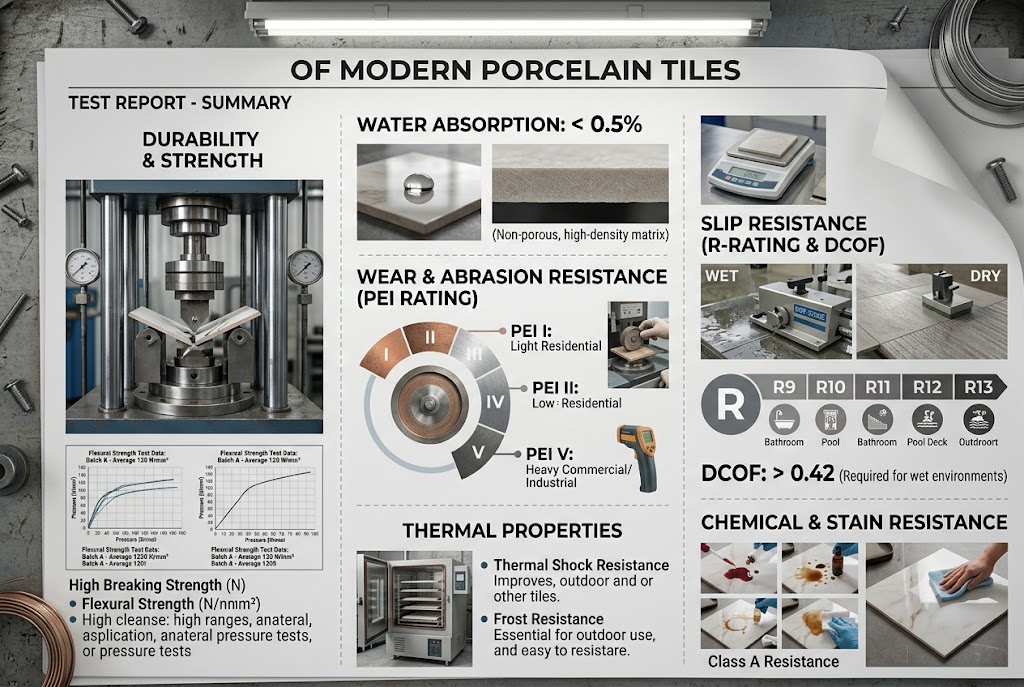
Water absorption (EN ISO 10545-3) — lower absorption means better durability.
-
Breaking strength & bending resistance — to ensure tiles can handle weight.
-
Slip resistance (EN 51130 & EN 14231) — crucial for wet and outdoor areas.
Tiles from Worldwave International conforming to EN standards are ideal for European and international projects.
🔷 ANSI (American National Standards Institute)
ANSI is used mainly in the U.S.:
-
ANSI A137.1 ensures quality in dimensions, water absorption, and strength.
-
ANSI A326.3 measures slip resistance through DCOF (Dynamic Coefficient of Friction).
We supply ANSI-compliant tiles to meet North American specifications seamlessly.
🔷 ISO (International Organization for Standardization)
ISO standards like ISO 13006 are global benchmarks for:
-
Frost & chemical resistance
-
Flatness & surface quality
-
Strength & long-term performance
At Worldwave International, our tiles are manufactured and tested to meet or exceed these rigorous ISO standards — ensuring reliability anywhere in the world.
Why Choose Certified Tiles?
Working with certified tiles from Worldwave International gives you confidence that your flooring and walls will stand the test of time — meeting all safety, aesthetic, and performance demands of modern construction.